How Steel Production Works – From Raw Material to All-Purpose Material
Babera Niemayr 01/10/2024 ·
12 min read
Steel production is the backbone of modern industries and one of humanity's greatest achievements. Whether in the construction sector, the aerospace industry, mechanical engineering, or the automotive industry—steel is used everywhere. In this article, we explain the basics of steel production, highlight key milestones, and introduce modern methods along with the entire manufacturing process.
What is Steel?
Steel refers to alloys with iron as the main component and a carbon content of < 2 %. (Differentiation from cast iron). Elements such as chromium, manganese, silicon, nickel and molybdenum are added to adjust certain mechanical and physical properties. The chemical composition depends on the desired property profile or the specific application, e.g. in the automotive industry or in the manufacture of tools.
Iron (Fe): The base material that forms the basic structure of steel. Iron is naturally relatively soft and has a low tensile strength, which means that it is unsuitable for many applications without further processing.
Carbon (C): The addition of carbon to iron is the crucial step that gives steel its special properties. Carbon increases the hardness and strength of steel through the formation of carbides and influences the microstructure, making it more resistant and at the same time more ductile.
The carbon content in steel influences both the strength and the formability of the material. A higher carbon content leads to harder but less ductile steel, while a lower carbon content increases ductility but reduces hardness.
Milestones in Steel Production
The steel industry has a long and dynamic history, dating back to antiquity. The first known steel products originated in India in the 3rd century BC, where Wootz steel was developed. This early form of steel was known for its hardness and toughness and was used in weapons and tools. Over the centuries, the technology spread, especially in Europe, where the use of blast furnaces in the Middle Ages led to mass iron production.
In the 19th century, the industrial revolution transformed steel production with the introduction of new technologies. The invention of the Bessemer process (1856) enabled the cost-effective conversion of pig iron into steel, a major breakthrough for the industry. This process laid the foundation for modern steel production, which was further refined in the following decades by the development of the Thomas process and the electric steelmaking process.
A significant innovation was the development of the electric arc furnace (EAF), a process introduced in the early 20th century and continuously improved since then. The integration of recycling processes and the development of efficient production methods have helped minimize environmental impact and use resources more efficiently. Today, the industry faces the challenge of reducing its environmental footprint while meeting the demand for steel products.
The Two Main Methods of Steel Production
Steel is mainly produced using two methods: the blast furnace route and the electric arc furnace route. Both methods have their own specific processes, advantages and disadvantages, which are described below. The blast furnace route is a traditional process for steel production that is primarily used in mass production. In a blast furnace, iron ore, coke and aggregates such as limestone are layered and heated by hot air.
The blast furnace process begins with the careful feeding of the raw materials into the blast furnace. This process is crucial for the efficiency and quality of the pig iron produced. The primary raw materials that are fed into the blast furnace are iron ore, coke and aggregates.
Iron ore is the main component of the blast furnace process and usually consists of various forms of iron oxide, such as hematite or magnetite. These ores must first be processed in a crushing and preparation step in order to concentrate the iron content and reduce impurities. The iron content of the ore is crucial, as a higher concentration leads to a better yield.
Coke is obtained from coal and is used as a reducing agent and as fuel in the blast furnace. Coke is important as it releases carbon monoxide (CO) when heated in a special process, the coking process, which then acts as a reducing agent. At temperatures between 1,200 and 1,600 degrees Celsius, the chemical reaction takes place in which the carbon from the coke reacts with the oxygen in the iron ore and releases iron. This reaction is exothermic, which means that it generates heat that further heats the blast furnace and thus increases the efficiency of the process.
The aggregates, such as limestone, have the function of binding impurities from the ore and forming slag. This slag, which consists of silicates and other minerals, is light and floats on the molten pig iron, making it easier to separate unwanted components. The use of aggregates is important to improve the quality of the end product and optimize blast furnace operation.
In the blast furnace, the materials are applied in layers, with the layers of iron ore, coke and aggregates being introduced alternately. The combustion process is promoted by blowing hot air (atmospheric oxygen) into the blast furnace from below. This hot air increases the temperature in the blast furnace and helps to burn the coke and produce the necessary carbon monoxide.
The iron ore is reduced at temperatures of up to 1,600 degrees Celsius. The carbon from the coke reacts with the oxygen in the iron ore to form carbon monoxide, which reduces the iron oxide and releases iron.
The resulting liquid pig iron collects in the bottom of the blast furnace and typically has a carbon content of around 3-4%. This makes the pig iron brittle and unsuitable for most applications, which is why it must be further processed in subsequent processes. The pig iron is regularly drained and can either be used directly to produce steel or cast into iron ingots or billets in casting molds.
The pig iron also contains impurities such as silicon, manganese and phosphorus, which originate from the iron ore and aggregates. These impurities must be removed in subsequent processes, such as converting or refining, in order to achieve the desired properties of the end product.
The advantages of the blast furnace route are its high production capacity and economic efficiency, especially in large plants. A typical blast furnace can produce several million tons of steel per year. However, the process is energy-intensive and associated with high CO2 emissions, as fossil fuels are used in large quantities. This poses a challenge to the sustainability of steel production that needs to be addressed through innovative technologies and alternative raw materials.
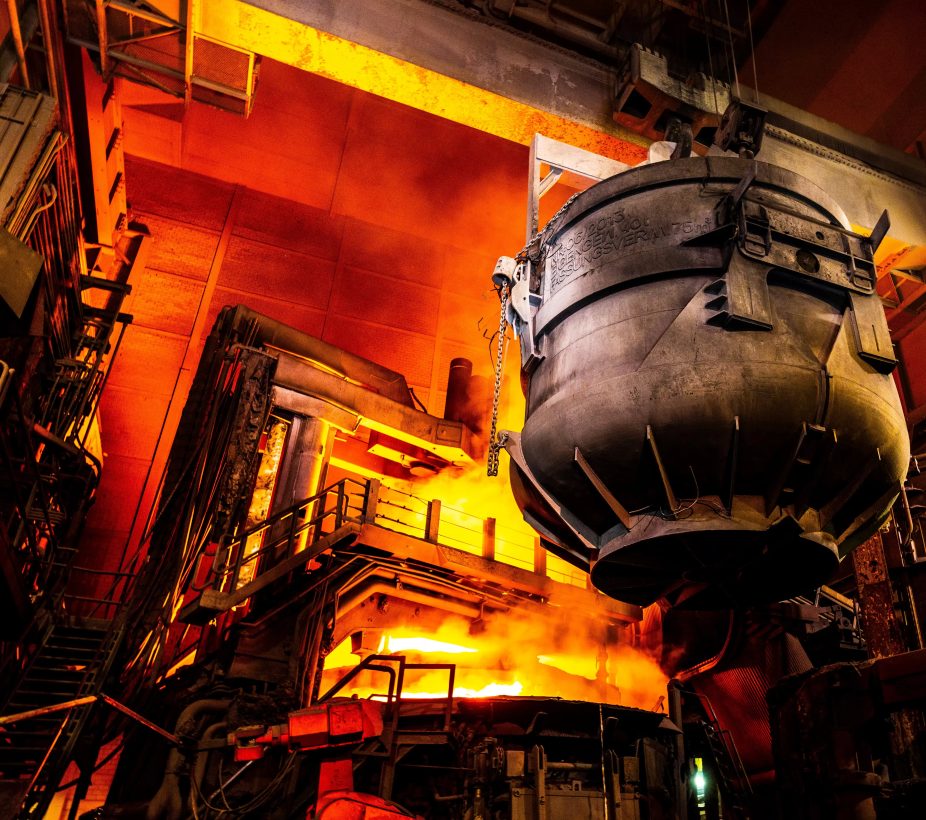
The electric arc furnace route has become increasingly important in recent decades. In this process, electric current is used to create an arc between electrodes that melts the scrap material. The Swiss Steel Group has deliberately opted for the electric steel route and relies on state-of-the-art electric arc furnaces.
The process of steel production using electric arc furnaces begins with the careful collection of steel scrap. This scrap can come from various sources, including industrial waste, production surpluses and scrap metal. The use of recycled steel scrap is an essential aspect of modern steel production, as it not only reduces the environmental impact but also minimizes the need for new raw materials. The steel scrap is usually collected in different grades and forms, which are then carefully sorted and shredded to ensure that unwanted impurities such as plastic, rubber or wood are removed.
Once the scrap has been processed, it is loaded into the electric arc furnace. This type of furnace consists of a robust, refractory chamber designed to withstand high temperatures. The scrap is loaded into the furnace and the amount and type of material can vary depending on the specific requirements of the end product. The furnace is equipped with two or more electrodes, typically made of graphitic material that can withstand high temperatures while providing good electrical conductivity.
The arc is created by applying a high electrical voltage between the electrodes. This process begins by lowering the electrodes into the scrap area. When the electrodes get close enough to the scrap, the arc begins to create an electrical discharge between the electrodes. This discharge generates extremely high temperatures, which can often reach 1,600 degrees Celsius or more. The arc itself is an intense light and also generates considerable heat, allowing the furnace to melt the material quickly and efficiently.
The high temperatures in the electric arc furnace allow the scrap to be quickly transformed into liquid steel. Typically, the entire melting process takes between 30 minutes and 2 hours, depending on the amount of material loaded and the specific production targets. Various chemical reactions also take place during this melting process.
In addition to the melt, the molten bath is also constantly mixed in the electric arc furnace to ensure an even temperature distribution and to ensure that all parts of the material are melted efficiently. By controlling the power supply and electrode position, steelworks can precisely regulate the temperature and melting rate, increasing the flexibility and efficiency of the process. Once the steel has been successfully melted, alloying elements can be added to achieve the desired properties of the final product.
Once all the desired alloying elements have been added and the chemical properties of the steel have been optimized, the molten steel is poured into casting moulds or transferred to controlled casting equipment where it can be further processed. This can include the formation of ingots, billets or other shapes, which are then transformed into various products.
A key advantage of the electric arc furnace route is its lower environmental impact compared to the blast furnace route, as it requires less fossil fuel and is often based on recycled material. This method is more flexible and can also produce smaller production quantities efficiently, which makes it attractive for many modern steel forges. Many modern plants already use up to 100% scrap, which not only protects the environment but also improves profitability.
Another advantage of the electric arc furnace process is the ability to monitor and adjust the chemical composition of the steel in real time during the melting process. Modern equipment often uses advanced sensors and analysis software to measure the chemical properties of the molten material and adjust the process accordingly. This allows for more precise control of steel quality and customization to meet specific customer requirements.
Alloying Elements
The properties of steel can be significantly influenced by the addition of alloying elements. The most common alloying elements include carbon, manganese, chromium, nickel and vanadium.
Carbon: The main component that gives steel its strength and hardness. Higher carbon contents result in harder steel, but can also reduce toughness. The carbon content can be controlled by various processes to achieve the desired properties.
Manganese: Improves strength and toughness and helps stabilize the properties of steel at high temperatures. Manganese also acts as a degreaser, reducing impurities during the melting process.
Chromium: Increases the corrosion resistance and hardness of steel. It is an essential component of stainless steel, which is widely used in many applications, from household appliances to construction projects.
Nickel: Adds toughness to steel and improves corrosion resistance. Nickel steel is often used in the construction industry, especially in areas that require high strength and corrosion resistance.
Vanadium: Used to improve strength and toughness and plays an important role in high performance steels used in demanding applications such as aerospace and engineering.
Selecting the right alloying elements is critical to meeting specific requirements in industries ranging from automotive to construction. Companies are investing in research and development to discover new alloy formulations that offer specific properties while promoting sustainable practices.
Circular Economy with Recycled Materials
An important aspect of the electric arc furnace route is the integration of recycled materials. Steel is the most recycled material in the world, and the use of scrap not only reduces the need for new raw materials, but also the environmental impact of steel production. By using recycled material, energy consumption is reduced, which contributes to a significant reduction in CO2 emissions.
The circular economy in the steel industry promotes the reuse and recycling of materials, which is crucial for sustainable development. The ability to convert old steel products into new ones without compromising the quality of the end product is an important factor for future steel production. Companies are increasingly turning to technologies that collect and process scrap from various sources to ensure high quality recycled steel.
For example, in 2022, the Swiss Steel Group recycled approximately 2.0 million tons of scrap, which also makes it one of the leading European recycling companies.
Another key aspect of scrap recycling is the recovery and reuse of alloying elements such as chromium, nickel and molybdenum, which are often contained in stainless steels. The targeted use of alloyed scrap reduces the need for newly extracted primary raw materials, the production of which is energy-intensive.
Conclusion
Steel production is and remains the foundation of modern industries, as it shapes almost all areas of daily life - from infrastructure and construction to mechanical engineering and high technologies such as the automotive and aviation industries. Despite the long history and tradition of steel production, the industry has continuously produced innovations and efficiency improvements that have revolutionized the production process.
Today's manufacturing processes, such as the blast furnace and electric arc furnace routes, illustrate the technological diversity of steel production. While the blast furnace process stands out due to its massive production capacity, the electric arc furnace offers clear advantages in terms of environmental friendliness and flexibility. The increasing integration of recycling processes, in particular the recovery and reuse of valuable alloying elements such as chromium, nickel and molybdenum, plays a decisive role in conserving resources.
With a focus on sustainability, the steel industry and the Swiss Steel Group will continue to seek innovative ways to reduce their environmental impact while providing high-quality products.